
Regenerative Medicine
iPS Cell Banking
Store your cells in Tokyo
The programme has two phases. First, banking: induced pluripotent stem (iPS) cells are created from your own blood and placed in long-term storage. Then, from roughly six to eight months after the blood draw, iPSF — the culture supernatant collected from those cells — can be administered, one vial at a time, in a course agreed with your physician.
AFRODE CLINIC is a preventive medicine clinic in Omotesando, Tokyo. Banking itself is not a treatment. We handle the consultation, the blood draw and, later, the administration of iPSF; production and storage are carried out by a licensed cell-processing facility in Kyoto.
Designed around a single visit
Banking itself takes a single visit in Tokyo
A single blood draw
About 30 mL of blood
The only step that takes place at our clinic in Omotesando is a blood draw of roughly 30 mL. There is no hospital stay and no surgical procedure, and you can continue your trip the same day.
No need to return
The rest is handled in Japan
Production and cryopreservation take place at a licensed facility in Kyoto. You do not need to travel back to Japan while your cells are being made or while they are in storage.
Timeline
Six to eight months
It takes approximately six to eight months from the blood draw for your iPS cells to be produced. Only after that can iPSF be administered. Because of this, banking cannot respond to an urgent need that arises after illness or injury.
Process
Three steps
01
Blood draw in Tokyo
Approximately 30 mL of blood is collected at AFRODE CLINIC in Omotesando, after a consultation and consent process in English.
02
Production in Kyoto
Blood cells are reprogrammed into iPS cells at a licensed cell-processing facility. This step takes approximately six to eight months.
03
Long-term storage
Your cells are cryopreserved in liquid nitrogen under strict quality and safety management. Storage is renewed every ten years.
After banking
iPSF — using what your own cells produce
Once your iPS cells exist, they can be cultured, and the fluid they are cultured in — the culture supernatant, which we refer to as iPSF — can be collected and administered back to you by injection or intravenous drip. Because it originates from cells made from your own blood, iPSF is not donor-derived.
When it starts
From about six months on
Administration can begin once production is complete, which is approximately six to eight months after your blood draw. The blood draw is a one-time step — it does not need to be repeated for the course.
How it is arranged
Courses of six or twelve vials
iPSF is arranged as a course of either six or twelve vials. One vial is used per session, so a course is completed over a series of separate appointments rather than in a single visit.
Scheduling
Intervals agreed with your physician
The spacing between sessions is decided in consultation with your physician, taking your travel schedule into account. If you visit Japan periodically, tell us your likely pattern of visits and we will discuss what is feasible.
iPSF is provided as self-pay medical care using a substance that has not been approved as a pharmaceutical in Japan or in any other country. No therapeutic effect is guaranteed, and suitability is assessed individually at consultation. Please read the important information below.
Why AFRODE CLINIC
Why a preventive medicine clinic offers this
AFRODE CLINIC was founded in Omotesando, Tokyo in 2021 by Dr. Shotaro Michishita, a neurosurgeon whose work in palliative and end-of-life care shaped what the clinic set out to do. “AFRODE” is a coined word from alive from death, and the clinic’s stated purpose is to enhance the value of life rather than only to respond to illness once it has arrived.
That background is the reason banking sits with us. In end-of-life care you meet the limits of what medicine can offer once a condition has already advanced. Preventive medicine works from the other direction — it acts while a person is still well. Banking is that idea carried to its furthest point: cells are collected while you are healthy, because that is the only time they can be. After illness or injury it is often too late, and the six to eight months of production cannot be shortened to meet an emergency.
This is also not a stand-alone procedure for us. Preventive care — health screening, lifestyle prescriptions, nutrition, recovery — is what the clinic does day to day, drawing broadly on evidence-based, U.S.-informed practice. If you bank with us, the same clinic handles the consultation, the blood draw, the iPSF sessions afterwards, and whatever else you want reviewed along the way.
Your own cells
The iPS cells are created from your own blood, and the iPSF administered to you originates from those cells. It is not derived from a donor or from another person’s stem cells.
One clinic, start to finish
The consultation, the consent process, the blood draw and the later administration of iPSF all take place at AFRODE CLINIC. You deal with the same clinic throughout, rather than being referred onward at each stage.
A licensed partner facility
Production and storage are carried out by I Peace, Inc. in Kyoto, which holds a licence from Japan’s Ministry of Health, Labour and Welfare for the manufacture of specified processed cell products.
Handled in English
The consultation, the explanation of risks and the consent documents are handled in English, and we are set up to receive patients who are visiting Japan rather than living here.
What you can and cannot do
An honest picture of the service
We would rather you decide with the limitations in front of you than without them.
What you can do
- Have medical-grade iPS cells produced from your own blood and kept in storage
- Prepare in advance for regenerative medicine that may become available in the future
- Request that your stored cells be provided to a treating institution, at the judgement of your physician at that time
- Keep cells that have the potential to differentiate into a wide range of cell types
- Expect a lower risk of immune rejection than with cells from another person, because the cells are your own
- Have your cells stored under GMP-compliant management at a licensed facility
- Decide for yourself whether to continue or discontinue storage
- Have iPSF — the culture supernatant from your own cells — administered from about six months onward, in a course of six or twelve vials
- Optionally consent to your cells being used for research — participation is never required
What you cannot do
- Treat an existing illness now — banking is preparation, not therapy
- Receive any guarantee of a therapeutic effect
- Rely on a promise that the cells will work for any and every disease
- Take possession of the cells freely, without a physician’s direction
- Use the cells to treat another person — storage is for your own use in principle
- Use the cells for any purpose prohibited by law or medical ethics
- Use the cells for cloning, embryo creation, or reproductive purposes
- Complete an iPSF course in one visit — one vial is used per session, over separate appointments
- Begin iPSF before production is finished, which takes about six to eight months
- Be compelled to take part in research — research use is entirely optional
Regulation
Where Banking and iPSF Sit in Japanese Regulation
Two different things are happening in this programme, and they are not regulated in the same way. It is worth understanding the difference before you decide.
Making and storing the cells
Carried out under a licence
Producing iPS cells from your blood and storing them is cell manufacturing. It is performed by a company holding a licence from Japan’s Ministry of Health, Labour and Welfare for the manufacture of specified processed cell products, working to documented standards and subject to inspection. This is the part of the programme with formal external oversight.
Administering iPSF
Outside the cell therapy law
iPSF is the culture supernatant collected from your cells. It contains no living cells, and Japan’s Act on the Safety of Regenerative Medicine governs the administration of processed cells. Supernatant and extracellular vesicles therefore fall outside that Act, and no regulator has approved any such preparation as a medication. Quality here rests on the manufacturer’s standards and the clinic’s own.
This gap is not a detail. A 2024 analysis in Stem Cell Reports found 669 medical facilities in Japan offering exosome-based interventions — far more than in the United States or the EU — and observed that, because extracellular vesicles are not cells, there is almost no regulation restricting interventions in this category that lack a medical basis. The same paper noted that reports of serious adverse events could not be verified either way, because no reporting system covers them.(1) In April 2025 Kyoto University’s CiRA likewise noted that improperly managed exosome treatments have been reported to cause severe harm to patients.(2)
We tell you this for a straightforward reason: the safeguards that make the banking side of this programme sound do not automatically extend to the administration side. What protects you there is the standard of the facility that produced the vial and the judgement of the physician who gives it. Those are things you can check, and you should.
(1) Fujita M, Hatta T, Ikka T, Onishi T. The urgent need for clear and concise regulations on exosome-based interventions. Stem Cell Reports 2024 Nov;19(11):1517-1519. (2) Center for iPS Cell Research and Application (CiRA), Kyoto University. The Expanding Field of Exosome Therapy: Challenges and Regulatory Considerations. CiRA newsletter, 15 April 2025.
Manufacturing
Who makes and keeps your cells
Production and storage are carried out by I Peace, Inc., a cell manufacturing company based in Kyoto that holds a licence from Japan’s Ministry of Health, Labour and Welfare for the manufacture of specified processed cell products. AFRODE CLINIC’s role is the consultation, the consent process and the blood draw.
The underlying technology originates from the work of Professor Shinya Yamanaka, who was awarded the Nobel Prize in Physiology or Medicine in 2012 for the discovery of induced pluripotent stem cells.
A checklist you can use anywhere
What to Verify Before You Bank Cells — With Anyone
You are entering an agreement that is meant to outlast your trip by decades. Ask these questions of us, and of anyone else you are considering. A provider who will not answer them in writing has answered them.
| Question | Why it matters |
|---|---|
| 1. Who actually manufactures and stores the cells, and under what licence? | The clinic you visit is often not the company holding your cells. You are entitled to know the name of that company and the licence it holds. Ours is I Peace, Inc. in Kyoto, licensed by Japan’s Ministry of Health, Labour and Welfare for the manufacture of specified processed cell products. |
| 2. What happens to my cells if the storage company ceases to operate? | Storage is a multi-decade commitment made to a commercial entity. Ask what contingency exists, and get the answer in writing. |
| 3. What is the contract term, the renewal process and the total cost over time? | An initial fee and an ongoing storage fee are different things. Ask for the full picture, not the entry price. Ours is contracted in renewable ten-year terms. |
| 4. Who owns the cells, and can I have them destroyed? | You should be able to withdraw and require disposal at any time, without justifying the decision. |
| 5. Can the cells be released to a hospital in my own country? | Cross-border transfer depends on the laws of both countries and cannot be guaranteed in advance. Be wary of anyone who promises that it can. |
| 6. Will my own cells actually be usable in future therapies? | No iPS cell-derived therapy has been approved by Japan’s PMDA or the U.S. FDA. Future approved therapies may not use the patient’s own cells at all. Banking buys an option, not an outcome. |
| 7. For iPSF: is each lot tested, and may I see the report? | The supernatant is administered intravenously. The same standards you would demand of any infused biological preparation apply here, and testing you cannot see is an assertion rather than a result. |
| 8. Who administers it, and what happens if I react badly? | Administration requires a physician present, resuscitation capability, and a plan for the hours afterwards — not only for the infusion itself. |
| 9. What is being claimed, and on what evidence? | If a provider describes banking as a treatment, or names diseases it can address, that claim is not supported by any approval anywhere in the world. |
| 10. What do I sign, and in what language? | Consent and the storage contract are binding documents. You should be able to read them in a language you are fluent in, and to take them away before signing. |
FAQ
Frequently asked questions
Q1. Do I need to stay in Japan while my cells are being made?
No. The only step that requires your presence is the blood draw at our clinic in Omotesando, Tokyo. Production and storage are handled in Kyoto, and you can leave Japan the same day as your visit. Note that this applies to banking itself — if you go on to have an iPSF course, that requires returning for each session.
Q2. How long does the visit take?
Please allow time for a consultation and the consent process in addition to the blood draw itself. The blood draw is approximately 30 mL and is comparable to a standard blood test. There is no hospital stay.
Q3. Is iPS cell banking a treatment?
No. It is a storage service. It does not treat any condition you currently have, and it is not a substitute for medical care. It is a way of keeping your own cells available in case regenerative medicine you may want becomes available in the future.
Q4. Are there approved therapies that use my banked iPS cells today?
No. As of today, no iPS cell-derived cell therapy has been approved by Japan’s PMDA or the United States FDA. Even if such therapies are approved in the future, they may not use a patient’s own iPS cells, and it is possible that your stored cells will never be used.
Q5. Is this covered by insurance?
No. This is self-pay medical care and is not covered by Japan’s public health insurance. Fees are not published on this page; please contact us and we will explain the current fee structure and payment terms in English.
Q6. How long are the cells stored, and what if I stop?
Storage is contracted in ten-year terms and is renewable. You may decide at any point to discontinue storage and have your cells disposed of. The decision is yours.
Q7. Can I have my cells sent to a hospital in my own country?
Cells can only be released to a medical institution at the direction of a treating physician, and any transfer is subject to the laws and regulatory approvals of both Japan and the destination country. We cannot promise in advance that a transfer to any particular country will be possible.
Q8. Can someone else in my family use my stored cells?
No. Stored cells are intended for your own use in principle. Each person who wishes to bank cells needs their own blood draw and their own storage contract.
Q9. What is iPSF, and when can I receive it?
iPSF is the culture supernatant collected from the iPS cells made from your own blood. It is administered by injection or intravenous drip. It can be started once production is complete, which is approximately six to eight months after your blood draw.
Q10. How many times do I need to come for iPSF?
iPSF is arranged as a course of either six or twelve vials, and one vial is used per session. That means six or twelve separate appointments. The interval between sessions is decided with your physician, and we will take your travel schedule into account when planning it.
Q11. Do I need another blood draw for each session?
No. The blood draw happens once. Everything that follows, including the whole iPSF course, is produced from the cells created from that single sample.
Q12. Is iPSF an approved medicine?
No. iPSF has not been approved as a pharmaceutical by Japan’s PMDA, by the United States FDA, or by the regulatory authority of any other country. It is provided as self-pay medical care at the discretion of the treating physician, and no therapeutic effect is guaranteed.
The physician responsible
Who You Will Be Seeing
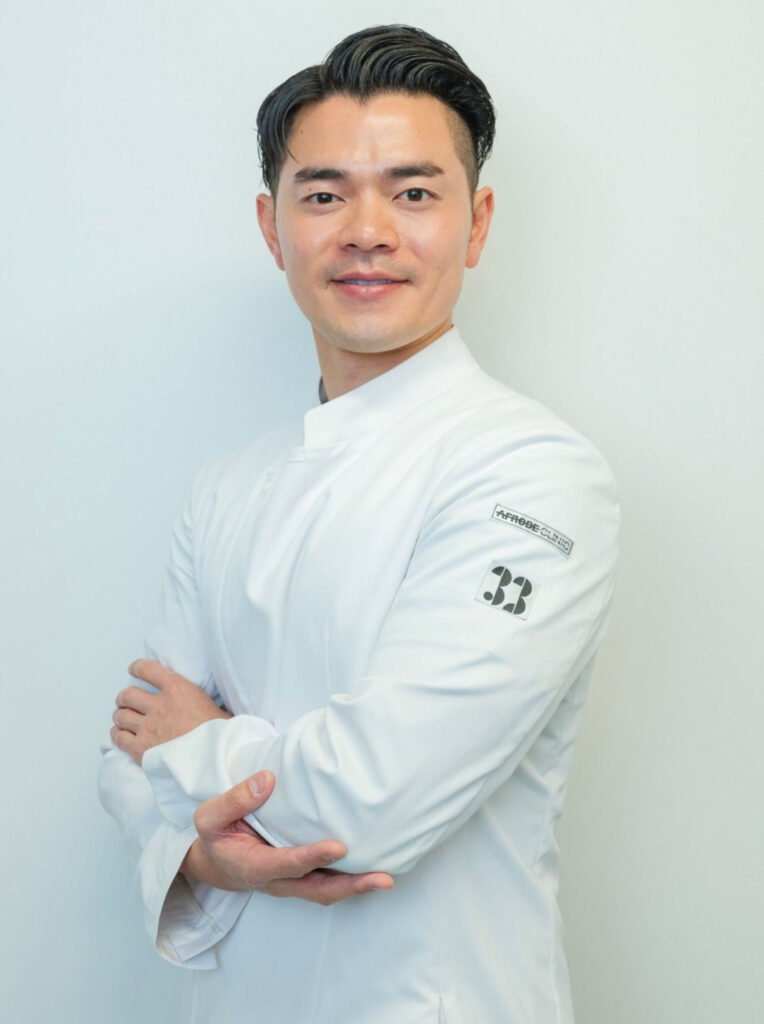
Representative Physician
Dr. Shotaro Michishita
Consultation, the consent discussion and the decision on whether to proceed are handled by Dr. Michishita personally. If we think a therapy is not appropriate for you, he will tell you so directly, and explain why.
| 2015 | Graduated from The Jikei University School of Medicine |
| 2017 | Joined Jikei University Hospital, Department of Neurosurgery |
| 2019 | Founded Re.habilitation Co., Ltd. |
| 2021 | Left Jikei University Hospital |
| 2021 | Representative Physician, AFRODE CLINIC |
Drawing on extensive experience as a neurosurgeon in end-of-life and palliative care, Dr. Michishita established AFRODE CLINIC with the philosophy of maximising the value of living. That background is the reason this clinic is careful about what it claims: he has spent his career close to patients for whom an unfounded promise would have cost something real.
The clinical content of this page has been reviewed by Dr. Michishita. Full team profiles →
Planning your visit
How These Fit Together for a Visit to Japan
Most people travelling to us are choosing between two different things, and they are often confused with each other. One is available today and uses donor-derived material; the other starts with your own cells and looks years ahead. They can be combined within a single trip, and the right combination depends on what you are actually trying to achieve.

| If your aim is | What we would usually discuss | What the trip looks like |
|---|---|---|
| Something during this trip — recovery support, fatigue, general age-management care | Stem cell supernatant IV therapy, using a donor-derived preparation manufactured and lot-tested in advance | One visit. Consultation and, if appropriate, administration on the same day. No culture period, so no second trip to Japan. |
| To keep future options open — you are well now and want your own cells preserved while they are younger | iPS cell banking: a single blood draw of about 30 mL, with production and long-term storage by a licensed facility in Kyoto | One short visit for the blood draw. You can continue your itinerary the same day. |
| Both — the most common request from patients travelling a long distance | Consultation covering both, then the blood draw for banking and, if suitable, the supernatant infusion | Can generally be arranged within a single visit. We ask you to allow observation time after any infusion, and not to fly on the day of treatment. |
| To use your own banked cells — iPSF, the supernatant from the cells you stored with us | iPSF administration, in a course agreed with your physician | A return visit from roughly six to eight months after the blood draw. Sessions are planned around your travel. |
All of the above is elective, self-pay care using preparations that are not approved as medications in Japan or elsewhere. None of it is offered as a treatment for a diagnosed condition. Because appropriateness depends on your medical history and current medication, please send us the enquiry form below before you book flights — we would rather tell you that we are not the right clinic for you while you can still change your plans.
Important information
Before you decide
Booking Inquiry
Ask us before you travel
Tell us roughly when you will be in Tokyo and what you would like to know. A short message is enough — we reply in English by email.
You can also reach us at procurement@mwp.work or +81-3-5843-0130.
AFRODE CLINIC — BASE Jingumae B1F, 3-5-7 Jingumae, Shibuya-ku, Tokyo 150-0001, Japan (5 minutes from Omotesando Station, Exit A2)
Are you a concierge, travel designer or advisor looking after guests in Japan? See Partner With Us.
Related
Looking for something during this trip?
Banking preserves your own cells for the future. If you are looking for something that can be administered during your current visit, see Stem Cell Supernatant IV Therapy — which also sets out, in detail, how to judge the quality of any preparation of this kind before you accept it.